

· Updated · Dolphin Sutures
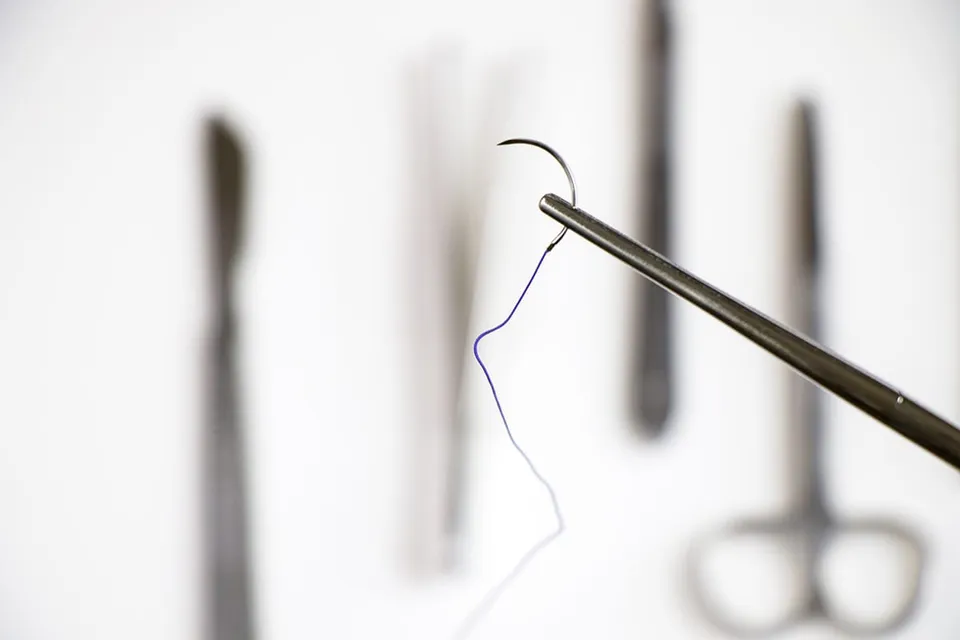
Wound closure remains a cornerstone of successful surgical outcomes, directly impacting infection rates, healing time, and cosmetic results. In modern surgical practice, the two predominant methods—surgical staples and surgical sutures—each offer specific clinical benefits and limitations. The right choice depends on tissue type, tension, surgical site, and postoperative care protocols.
Surgical Staples: Indications and Technical Considerations
Definition: Surgical staples are biocompatible metal fasteners, typically made from stainless steel or titanium, applied via a specialized stapler device.
Common Use Cases:
- High-tension areas (abdomen, scalp)
- Cesarean sections
- Gastrointestinal anastomosis
- Orthopedic and trauma surgeries
Technical Advantages:
🔹 Speed of Application – Staples can close long incisions in seconds, reducing exposure time and bleeding.
🔹 Uniform Wound Approximation – Staples provide consistent spacing and compression, promoting uniform healing in linear incisions.
🔹 Lower Infection Risk in Select Surgeries – The lower surface area and limited tissue penetration points may reduce infection risks in contaminated or emergency cases.
Limitations:
❌ Rigid Closure – Not suitable for areas requiring flexible or curved approximation.
❌ Increased Scarring – Higher risk of hypertrophic scarring, making them less ideal for facial or cosmetic applications.
❌ Postoperative Management – Requires professional removal and can cause patient discomfort during extraction.
Surgical Sutures: Material Versatility and Clinical Precision
Definition: Surgical sutures are sterile, biocompatible threads used to approximate tissue. Available in monofilament or braided structures, they may be absorbable or non-absorbable.
Dolphin Sutures offers a complete portfolio including:
- Absorbable sutures: PGA, Polyglactin 910, PDS , Poliglecaprone 25
- Non-absorbable sutures: Nylon (Polyamide), Polypropylene, Silk, Polyester, Stainless Steel
Clinical Benefits:
✔ High Precision Closure – Ideal for delicate tissue approximation (e.g., cardiovascular, plastic, ophthalmic surgeries).
✔ Customizability – Wide range of tensile strengths, coatings (e.g., PTFE, Silicone), and USP sizes (from 10-0 to 5).
✔ Aesthetic Outcomes – Reduced scarring makes sutures the preferred choice for facial, pediatric, and plastic surgery.
✔ Biodegradable Options – Absorbable sutures eliminate the need for suture removal, reducing patient visits.
Conclusion: Clinical Decision-Making
The choice between surgical staples and sutures should be based on wound location, tissue type, expected healing dynamics, and cosmetic priorities. For flexibility, minimal scarring, and a broad range of procedural needs, Dolphin Sutures provides a globally trusted range of CE-certified surgical sutures, available in synthetic and natural variants with tailored absorption profiles.
Optimize your surgical outcomes with Dolphin Sutures—precision, performance, and reliability in every stitch.
- FUTURA
- General
Talk to our team
Bulk pricing, OEM manufacturing and export documentation — response within one business day.