
 English
 Español
 Français
 Português
 Русский
 العربية
 Deutsch
 Türkçe
 Bahasa Indonesia
 Tiếng Việt
 ไทย
ไทย 简体中文
简体中文
Antibacterial Sutures
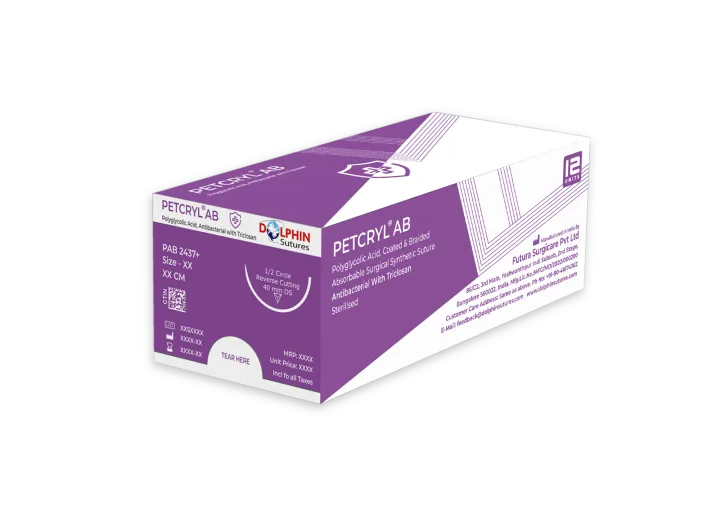
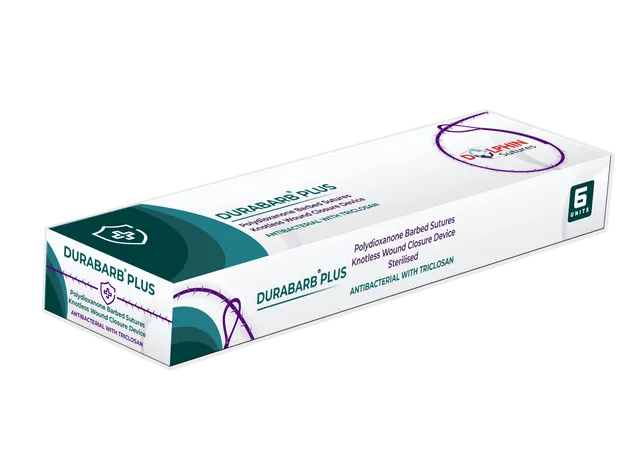
Dolphin Sutures antibacterial sutures are Triclosan-coated surgical sutures intended to inhibit bacterial colonization of the suture, available in absorbable and non-absorbable options for general soft tissue approximation and ligation across a wide range of procedures.
01
Triclosan-coated construction
The suture surface is coated with Triclosan, a broad-spectrum antibacterial and antifungal agent intended to inhibit bacterial colonization of the suture during the healing period.
02
Absorbable and non-absorbable options
The antibacterial range covers both absorbable and non-absorbable platforms, letting surgeons match the antibacterial coating to the specific tissue and closure requirement of the procedure.
03
Braided Polyglactin 910 platform
The absorbable variant is a coated, braided copolymer of 90% Glycolide and 10% L-Lactide, absorbed by hydrolysis into glycolic and lactic acids that the body metabolizes.
04
Low tissue drag handling
The coated surface reduces tissue drag for smoother suturing, while minimal memory and good pliability support precise placement, reliable knot formation, and reduced tissue sawing.
05
Secure knotting profile
Tensile strength and knot-holding capability support knot security throughout closure; standard flat, square ties with additional throws are recommended for the absorbable platform.
06
MRI compatible
The absorbable Polyglactin 910 antibacterial suture is compatible with magnetic resonance imaging, so patients with implanted sutures can undergo MRI scans for postoperative imaging.
What antibacterial sutures are
Dolphin Sutures offers an extensive antibacterial suture range in which the suture is coated with Triclosan, a broad-spectrum antibacterial and antifungal agent. The coating is intended to inhibit bacterial colonization of the suture itself. The range spans both absorbable and non-absorbable options, allowing surgeons to match the antibacterial platform to the closure requirement rather than compromising on material choice.
The coated and braided Polyglactin 910 antibacterial suture is a sterile, absorbable surgical suture intended for general soft tissue approximation and/or ligation. It is supplied with or without a needle and, where specified, with or without a barb.
Composition and construction
The Polyglactin 910 antibacterial suture is crafted from a copolymer of 90% Glycolide and 10% L-Lactide, comprising polyglycolide and co-lactide at approximately 99.5% w/w. It is coated with a mixture of Polyglactin 370 (a glycolide-lactide copolymer) and Calcium Stearate at less than 5% w/w, and the product contains Triclosan. Sutures are typically dyed with D&C Violet No. 2, with undyed options also available; dye content in dyed sutures is approximately 0.5% w/w. Where attached, needles are made from AISI 302 or AISI 420 stainless steel.
Handling and characteristics
The coated surface offers low tissue drag for smoother passage and reduced trauma to surrounding tissue. The suture provides knot security through its tensile strength and knot-holding capability, exhibits minimal memory for reliable knot formation, and its flexibility and pliability aid precise placement. Dyed sutures enhance visibility against tissue. The absorbable Polyglactin 910 platform is compatible with magnetic resonance imaging.
Presentations
Antibacterial sutures are available in a range of gauge sizes and lengths, needled or non-needled, in dyed or undyed forms. Absorbable Polyglactin 910 products comply with United States Pharmacopeia (USP) standards; where not marked with pharmacopeia standards, products are manufactured to the manufacturer’s specifications.
Frequently Asked Questions
Bulk pricing, OEM manufacturing and export documentation — response within one business day.
Contact SalesWhat are Dolphin antibacterial sutures used for?
How does the antibacterial coating work?
What is the absorbable variant made of?
How is the absorbable suture absorbed?
What sizes and configurations are available?
Are the sutures supplied sterile?
How should antibacterial sutures be stored?
How can distributors obtain product documentation?
Related products
Polyglactin 910 Sutures
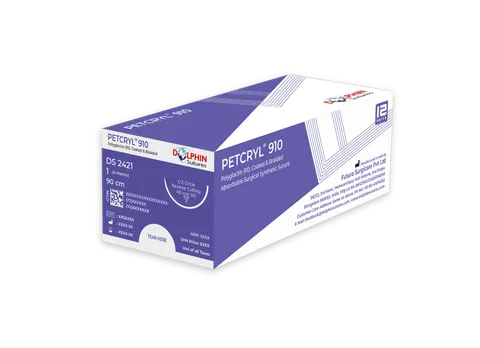
Petcryl 910 is a braided, coated synthetic absorbable surgical suture made from a copolymer of glycolide and L-lactide. It is designed for soft tissue approximation and ligation, providing predictable hydrolytic absorption and smooth tissue passage.
View details →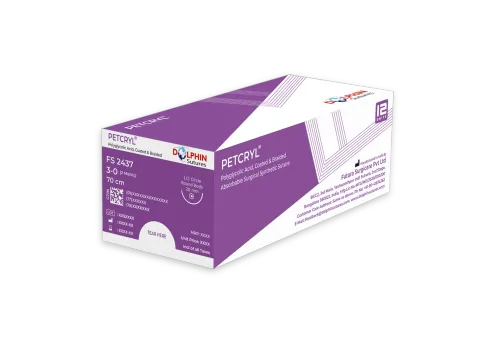
Polyglycolic Acid (PGA) Sutures
PGA Suture from Dolphin Sutures is a synthetic, braided, coated absorbable suture made from 100% polyglycolic acid, engineered for smooth tissue passage, high tensile-strength retention and predictable hydrolytic absorption in soft-tissue approximation.
View details →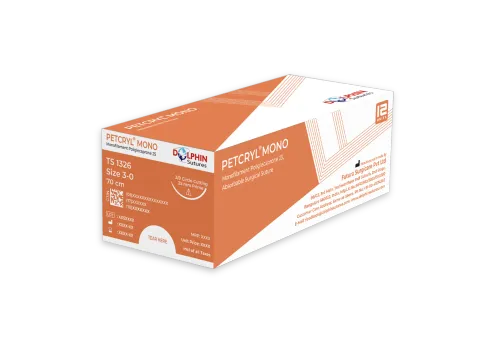
Poliglecaprone 25 Sutures
Petcryl Mono is Dolphin Sutures' Poliglecaprone 25 monofilament synthetic absorbable suture, a copolymer of glycolide and caprolactone offering smooth tissue passage, predictable hydrolytic absorption and low tissue reactivity for soft tissue approximation.
View details →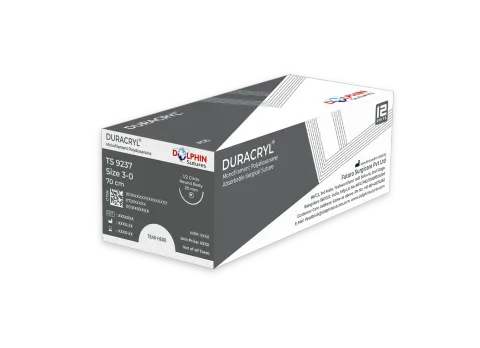
Polydioxanone Sutures
Duracryl is Dolphin Sutures' synthetic monofilament polydioxanone (PDS) suture, composed of poly (p-dioxanone). Absorbed by hydrolysis, it delivers extended tensile-strength retention for soft tissue approximation requiring longer wound support.
View details →Get a quote for Antibacterial Sutures
Bulk pricing, OEM manufacturing and export documentation — response within one business day.