
 English
 Español
 Français
 Português
 Русский
 العربية
 Deutsch
 Türkçe
 Bahasa Indonesia
 Tiếng Việt
 ไทย
ไทย 简体中文
简体中文
Antibacterial Coatings for Sutures
An antibacterial suture coating is a surface coating containing an antibacterial agent, applied to a suture strand in addition to the regular coating materials. The agents used for this purpose include triclosan, chlorhexidine and silver ion; used as a suture coating, they inhibit bacterial colonization of the strand itself. Whether a coated suture is available, and what it is approved for, is stated in its instructions for use.
Why it matters
A coated suture carries two distinct things on its surface, and they are easily conflated. The regular coating is a construction response: a braid has surface texture and interstices, and the coating — typically polycaprolactone with calcium stearate — addresses passage through tissue and knot tie-down. An antibacterial coating is an additional agent carried in or on that surface layer. Knowing which of the two a specification refers to is what lets a reader interpret a product description accurately. What such a coating is approved for is a regulatory question answered by the instructions for use in the market concerned, not by a reference article.
What the category is
Antibacterial coatings are a category of suture surface coating: a coating layer that carries an antibacterial agent. The agents used for this purpose on sutures are triclosan, chlorhexidine and silver ion.
The important structural point is that such a coating is additional. It does not replace the regular coating a braided suture already carries; it is applied alongside it. A product described as an antibacterial suture is, underneath, the same base material as its uncoated counterpart — the same polymer, the same construction, the same absorption mechanism. The coating is a surface layer and it changes the surface, not the strand.
What such a presentation is approved for, and whether it is available at all, is a regulatory matter that differs from market to market. That question is answered by the instructions for use supplied with the product in the country concerned, and it is not answered here. This article describes composition.
Why a braid is coated in the first place
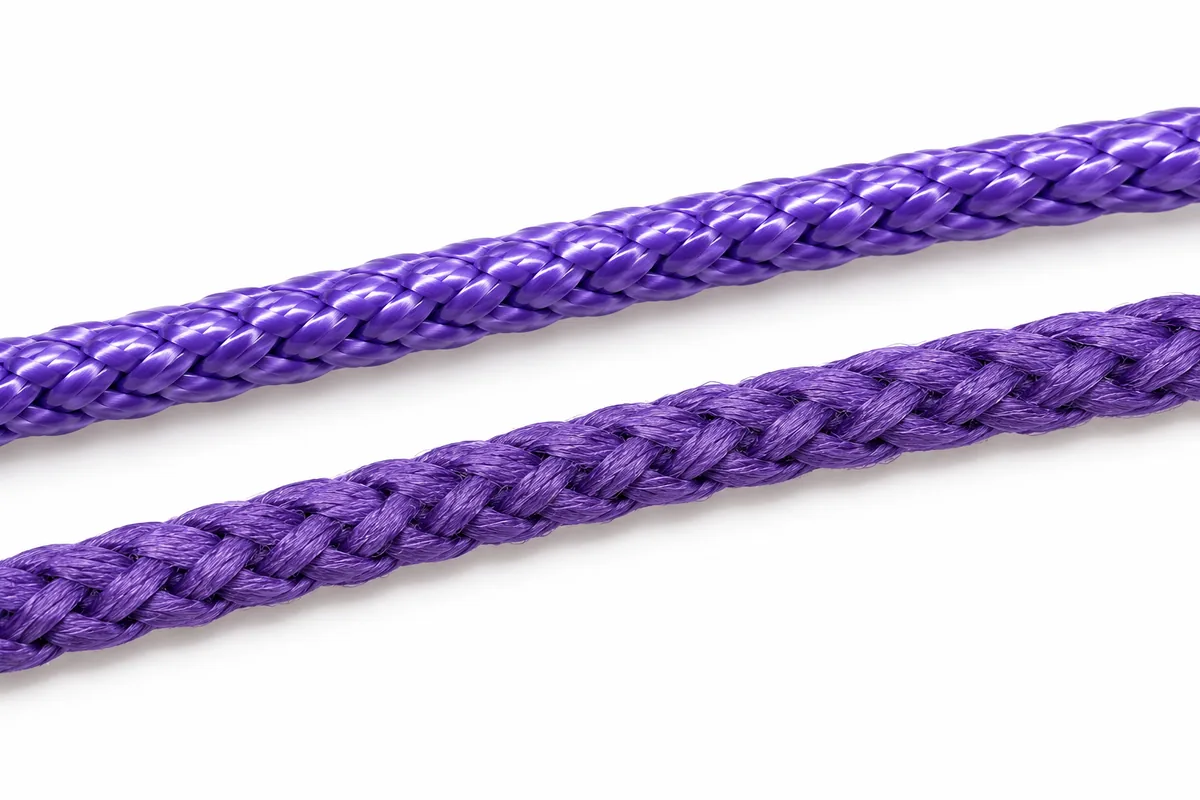
Coating is a response to construction. A braided suture is built from many fine filaments worked together, which gives the strand surface texture and leaves interstices between the filaments. The regular coating — typically polycaprolactone with calcium stearate on synthetic absorbable braids — is applied because of that texture, and it addresses passage through tissue and knot tie-down. Every coated braid carries this layer whether or not an antibacterial agent is present.
This is why antibacterial coatings appear most often on braided multifilament sutures: there is already a coating layer in the construction, and it is that layer which carries the additional agent. The agent is incorporated into or applied with the coating rather than bonded to the polymer of the strand itself.
This figure needs WebGL. A coated braided suture is many fine filaments braided together. Each filament carries its own coating layer, so the coating is present in the interstices between the filaments as well as around them, and the antibacterial agent is carried within that coating layer. It describes composition only.
The agents, as chemistry
The three agents are chemically unrelated to one another, and each is carried in the coating layer differently.
Triclosan is a chlorinated bisphenol — an organic compound, carried within the coating layer applied to the strand. Its regulatory status differs considerably between jurisdictions, which is one reason availability is market-specific.
Chlorhexidine is a bisbiguanide. In coatings it is generally used as a salt rather than as the free base — the diacetate and the digluconate are the usual forms — and the choice of salt determines its solubility and therefore how it is carried in the layer.
Silver ion is not an organic compound at all but a metal ion, presented in a coating as a salt, as a complex, or as a particulate dispersion within the coating layer. Formulations differ in which of these they use.
What these three have in common is their position on the product: all sit in the surface layer, over a strand whose own properties are unchanged. What they do not have in common is chemistry, form, or regulatory treatment — which is why they are not interchangeable as specifications, and why each coated product is governed by its own instructions for use.
– Read more about antibacterial sutures manufactured by Dolphin Sutures.
Key terminology
- Regular coating
- The surface layer applied to a braided strand to address drag through tissue and knot tie-down. On synthetic absorbable braids this is typically polycaprolactone with calcium stearate. It is present whether or not an antibacterial agent is also carried.
- Antibacterial agent
- A compound classified as antibacterial. Used as a suture surface coating, the agents are triclosan, chlorhexidine and silver ion. Their status, permitted use and approval differ by regulatory jurisdiction.
- Triclosan
- A chlorinated bisphenol compound. It is used as a suture surface coating, carried in the coating layer applied to the strand. Its regulatory status varies by market.
- Chlorhexidine
- A bisbiguanide compound, used in suture coatings commonly as a salt such as the diacetate or digluconate. The salt form determines its solubility and how it is carried in the coating layer.
- Silver ion
- Silver in ionic form, carried in a surface coating layer. Formulations differ in how the silver is presented — as a salt, a complex, or a particulate dispersion within the coating.
- Polycaprolactone
- A synthetic polyester used as a regular coating material on braided sutures. Where an antibacterial agent is applied, it is the coating layer of this kind that carries it.
- Calcium stearate
- The calcium salt of stearic acid, used with polycaprolactone in the regular coating of braided sutures.
Technical characteristics
- Category
- Surface coating containing an antibacterial agent
- Agents used as suture coatings
- Triclosan, chlorhexidine, silver ion
- Relationship to regular coating
- Applied in addition to the regular coating materials, not instead of them
- Regular coating materials
- Typically polycaprolactone with calcium stearate on synthetic absorbable braids
- Applicable construction
- Most commonly applied to braided multifilament strands; the base suture material is unchanged by the coating
- Base material
- The polymer, construction and absorption mechanism are properties of the underlying suture, not of the coating
- Indications and approved use
- Stated in the instructions for use supplied with the product. These vary by market and are not reproduced here.
- Availability
- Whether a coated presentation is offered for a given product and market is stated in the product documentation.
- Regulatory status of the agent
- The status of an antibacterial agent differs by jurisdiction. The instructions for use in the market concerned is the governing document.
How it compares
| Agent | Chemical class | Form used in coatings |
|---|---|---|
| Triclosan | Chlorinated bisphenol | Carried in the coating layer applied to the strand |
| Chlorhexidine | Bisbiguanide | Commonly a salt, such as the diacetate or digluconate |
| Silver ion | Metal ion | Presented as a salt, complex or particulate dispersion in the coating |
| Polycaprolactone / calcium stearate | Synthetic polyester with a fatty-acid salt | The regular coating layer itself — not an antibacterial agent |
What clinicians weigh when selecting
Which coating is being described
A specification may refer to the regular coating, to an antibacterial agent carried in it, or to both. The relevant question when reading a product description is which of the two is meant, because the terms are routinely used interchangeably and they are not the same thing.
The coating does not change the strand
Composition, construction and absorption mechanism belong to the base suture. A coated presentation and an uncoated one of the same material share those properties. The material question and the coating question are separate.
Regulatory status varies by market
The agents used in these coatings are regulated differently across jurisdictions, and a presentation available in one market may not be available or approved in another. This is a regulatory question, not a material one, and the instructions for use in the market concerned answers it.
What the IFU governs
What a coated suture is approved for, and the warnings and precautions that attach to it, are stated only in the instructions for use. This article describes what these coatings are made of; it is not a source for what they are indicated for.
Frequently asked questions
What is an antibacterial suture coating?
A surface coating containing an antibacterial agent, applied to a suture strand in addition to the regular coating materials. The agents used for this purpose are triclosan, chlorhexidine and silver ion.
Do triclosan-coated sutures reduce surgical site infection?
Triclosan-coated sutures are well studied. The WHO Global Guidelines for the Prevention of Surgical Site Infection suggest their use for the purpose of reducing the risk of surgical site infection, independent of the type of surgery — a conditional recommendation, based on moderate-quality evidence. That is a finding about the material class, and it is not a statement about any particular product: what a given suture is approved for is stated in its instructions for use and varies by market.
Which agents are used as antibacterial suture coatings?
Triclosan, chlorhexidine and silver ion. Triclosan is a chlorinated bisphenol; chlorhexidine is a bisbiguanide, commonly used as a salt such as the diacetate or digluconate; silver ion is presented as a salt, complex or particulate dispersion within the coating layer.
Does the antibacterial coating replace the regular coating?
No. It is applied in addition to the regular coating materials. A braided strand is coated — typically with polycaprolactone and calcium stearate — because of how it is constructed, and that coating is present whether or not an antibacterial agent is also carried.
What is a coated suture approved for?
That is stated in the instructions for use supplied with the product, and it varies by market. The instructions for use is the controlled document and the only source for approved use. We do not reproduce or summarise it here.
Does the coating change the suture material?
No. The polymer, the construction and the absorption mechanism are properties of the underlying strand. A coating is a surface layer; it does not alter what the strand is made of or how it is absorbed.
Are antibacterial coated sutures available everywhere?
No. Availability and approved indications vary by market, as does the regulatory status of the agents themselves. Whether a coated presentation is offered for a given product in a given market is stated in the product documentation.
Instructions for use
The instructions for use supplied with the product is the controlled document for indications, contraindications, approved use, warnings and precautions for any coated suture. It is the only source for what a coated presentation is approved for. Where this article and the instructions for use differ, the instructions for use govern. Availability, approved indications and the regulatory status of the coating agents vary by market.
Medical & regulatory notice
This article is general reference information for healthcare professionals about the composition of suture surface coatings. It describes what these coatings are made of and nothing further. It makes no statement about the effect of any coating, and none should be inferred from it. It is not medical advice, not a recommendation for any procedure or patient, and not a substitute for the instructions for use supplied with the product or for clinical judgement. Product availability and approved indications vary by market. Dolphin Sutures manufactures surgical sutures; nothing here should be read as a claim of clinical benefit or of superiority over another material.