
 English
 Español
 Français
 Português
 Русский
 العربية
 Deutsch
 Türkçe
 Bahasa Indonesia
 Tiếng Việt
 ไทย
ไทย 简体中文
简体中文
Teflene · Surgical Mesh
PTFE-Polypropylene Composite Mesh
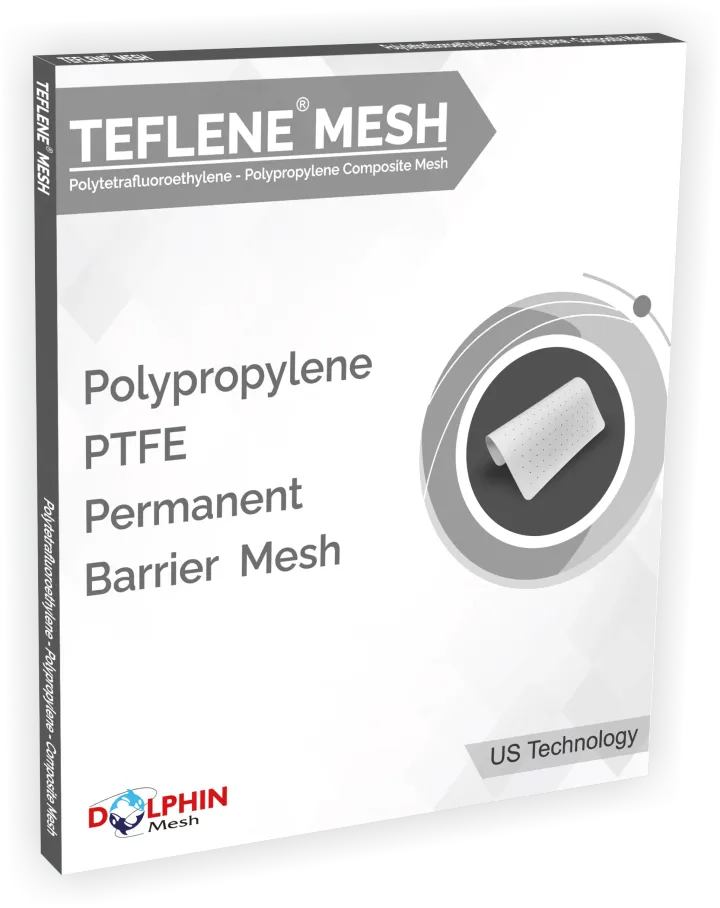
Teflene is a sterile, non-absorbable dual-sided composite mesh with a knitted polypropylene parietal side fused to an expanded PTFE (ePTFE) barrier on the visceral side, designed for open and laparoscopic intraperitoneal hernia repair.

01
Dual-sided composite construction
A knitted polypropylene mesh for the parietal side firmly fused to an expanded PTFE (ePTFE) sheet for the visceral side, forming a single composite mesh with two functionally distinct surfaces.
02
ePTFE barrier on the visceral side
The microporous, low-porosity expanded PTFE sheet is placed against the visceral side and is intended to act as a permanent barrier that minimises tissue attachment at that surface.
03
Macroporous polypropylene parietal side
The macroporous knitted polypropylene surface is intended to encourage tissue ingrowth and integration on the parietal side of the mesh.
04
Inert fluoropolymer material
Expanded PTFE is a fluoropolymer with a carbon backbone saturated with fluorine, an inert material intended for permanent implantation.
05
Perforations for seroma drainage
The mesh contains perforated holes that are intended to allow drainage of fluid and seroma.
06
Non-absorbable sterile prosthesis
A non-absorbable, sterile prosthesis supplied for single use in a range of shapes and sizes for open and laparoscopic intraperitoneal hernia repair.
What Teflene Mesh Is
Teflene is a sterile, non-absorbable composite mesh designed for intraperitoneal hernia repair. The dual-sided prosthesis fuses two functionally distinct surfaces into a single composite: a knitted polypropylene mesh intended to support tissue integration on one side and an expanded PTFE (ePTFE) sheet intended to act as a barrier on the visceral side. It is used for the reconstruction of soft-tissue deficiencies and is intended for use by a qualified surgeon trained in mesh implantation and the relevant surgical techniques.
Composition and Construction
Teflene is composed of a knitted polypropylene mesh for the parietal side firmly fused to an expanded polytetrafluoroethylene (ePTFE) sheet for the visceral side. Polytetrafluoroethylene is a linear homochain polymer with a carbon backbone saturated with fluorine, an inert fluoropolymer. The macroporous polypropylene surface is intended to encourage tissue ingrowth on the parietal side, while the solid, low-porosity ePTFE sheet is placed against the visceral side and is intended to act as a permanent barrier that minimises tissue attachment. The mesh also contains perforated holes intended to allow drainage of fluid and seroma.
Characteristics and Handling
A placement marker is provided to assist orientation. Proper orientation is essential: the ePTFE surface is placed against the bowel or other visceral structures, and the polypropylene surface faces the tissue plane where ingrowth is intended. The mesh can be fixed with sutures or tackers, with fixation engaging the mesh rather than the sealed edge alone. Selection of size, orientation and fixation method is at the discretion of the surgeon, based on the patient’s condition, the type and location of the defect, and operative requirements.
Applications
Teflene is designed for use in open and laparoscopic intraperitoneal placement, including:
- Ventral / incisional hernia
- Umbilical hernia
- Spigelian hernia
- Inguinal hernia — direct and indirect
- Epigastric hernia
Ordering Information
| Shape | Code | Size |
|---|---|---|
| Rectangular | TMR0611 | 6 × 11 cm |
| Rectangular | TMR0815 | 8 × 15 cm |
| Rectangular | TMR1015 | 10 × 15 cm |
| Rectangular | TMR1515 | 15 × 15 cm |
| Rectangular | TMR1520 | 15 × 20 cm |
| Rectangular | TMR3030 | 30 × 30 cm |
| Oval | TMO1015 | 10 × 15 cm |
| Circular | TMC10 | 10 cm |
| Circular | TMC12 | 12 cm |
| Circular | TMC15 | 15 cm |
Technical specification: thickness approximately 0.36 mm, non-absorbable, with a placement marker. For additional ordering and size information, contact our representative.
Frequently Asked Questions
Bulk pricing, OEM manufacturing and export documentation — response within one business day.
Contact SalesWhat is Teflene mesh made of?
What is Teflene intended for?
How is the mesh fixed?
Which way does Teflene face?
Is Teflene absorbable?
What sizes are available?
Related products
Polypropylene-Polyethylene Composite Mesh
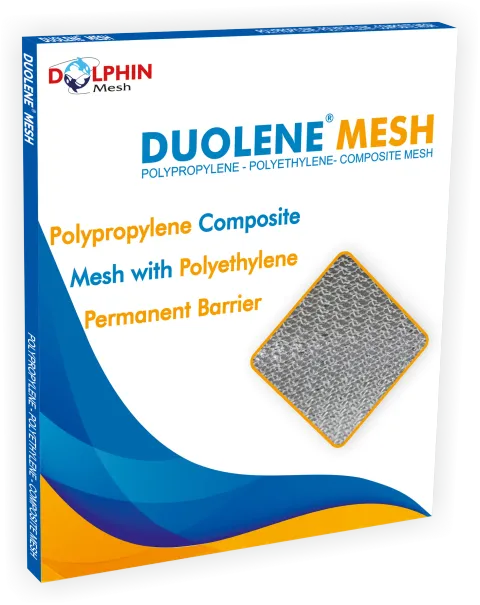
Duolene is a sterile, non-absorbable dual-sided composite mesh with a knitted polypropylene parietal side and a medical-grade polyethylene film on the visceral side, designed for open and laparoscopic ventral hernia repair.
View details →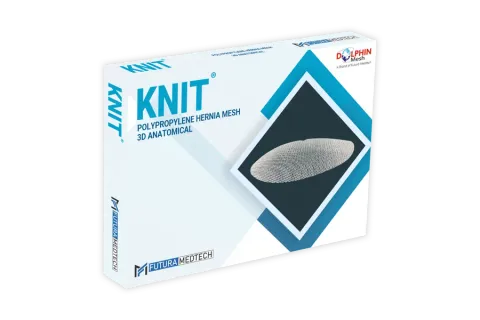
3D Anatomical Polypropylene Mesh
Knit 3D is a sterile, non-absorbable, pre-shaped three-dimensional polypropylene mesh with a contoured anatomical design for laparoscopic inguinal hernia repair, supplied in left and right configurations across three sizes in Macropore and Medium pore.
View details →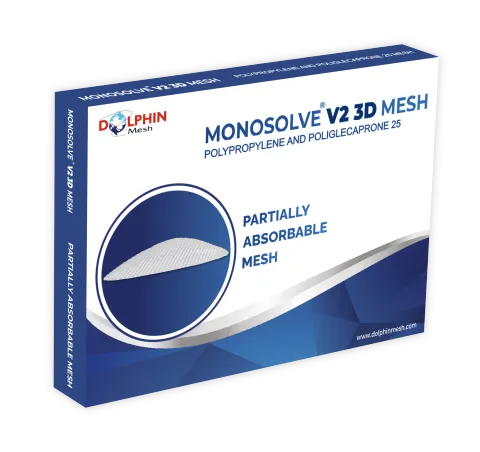
Semi Absorbable 3D Anatomical Mesh
Monosolve V2 3D is a sterile, semi absorbable, pre-shaped three-dimensional composite mesh of polypropylene and poliglecaprone 25, with a contoured anatomical design for laparoscopic inguinal hernia repair, supplied in left and right configurations across three sizes.
View details →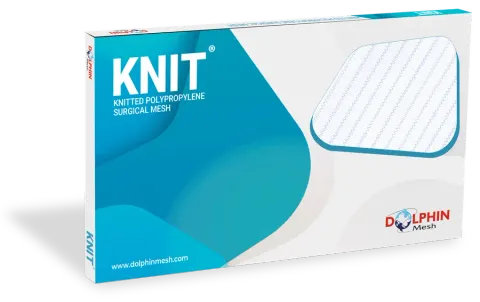
Knitted Polypropylene Mesh
Knit is a sterile, non-absorbable knitted monofilament polypropylene mesh for tension-free and laparoscopic hernia repair, available in Ultra Soft, Soft, Macropore and Robust variants across a range of sizes.
View details →Get a quote for Teflene
Bulk pricing, OEM manufacturing and export documentation — response within one business day.