
 English
 Español
 Français
 Português
 Русский
 العربية
 Deutsch
 Türkçe
 Bahasa Indonesia
 Tiếng Việt
 ไทย
ไทย 简体中文
简体中文
Waxocare · Hemostats
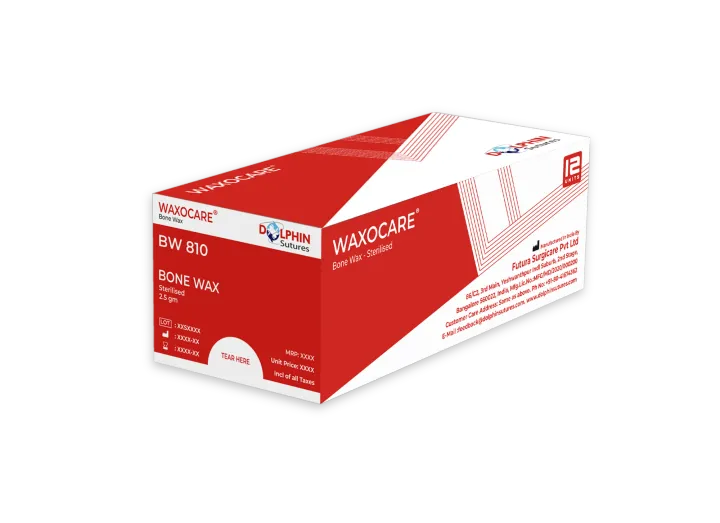
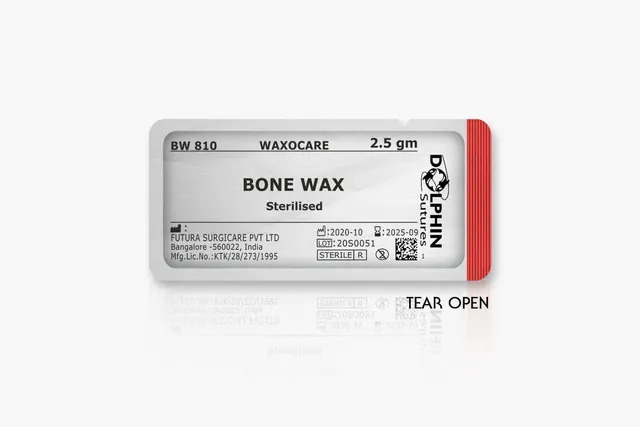
Bone Wax
Bone Wax is a sterile, non-absorbable bone hemostatic material of beeswax, paraffin and isopropyl palmitate that provides immediate mechanical control of bleeding from cut bone surfaces during surgery.
01
Mechanical bone hemostasis
Acts as a physical tamponade barrier, blocking open osseous channels to provide immediate control of bleeding from cut bone surfaces during surgery.
02
Beeswax and paraffin composition
Formulated from beeswax and paraffin wax with isopropyl palmitate as a softening agent; uncoated, undyed and natural in colour with a characteristic waxy odour.
03
Non-absorbable material
Bone Wax is non-absorbable and is not intended to be resorbed by the body, remaining at the application site unless removed by the surgeon.
04
Grade-0 tissue reactivity
Rated Grade-0 reactivity (none) in tissue testing, reflecting a material intended for controlled local application on bone surfaces.
05
Broad surgical applications
Used in general orthopaedics, craniomaxillofacial and neurosurgery, and cardio-thoracic surgery for sternal closure and other procedures involving cut bone.
06
Sterile single-use presentation
Sterilized by gamma radiation and supplied sterile for single use in a 2.5 gm stick; do not reuse, reprocess or resterilize.
What Bone Wax Is
Bone Wax is a sterile, non-absorbable surgical hemostatic material intended for the mechanical control of bleeding from bone surfaces during surgical procedures. Rather than acting biochemically, it works as a physical barrier: pressed into bleeding bone, it occludes the open osseous channels and provides immediate hemostasis by tamponade. It is supplied sterile for single use and is indicated for use by qualified medical professionals.
Composition and Construction
Bone Wax is a combination of beeswax and paraffin wax, with isopropyl palmitate acting as a wax-softening agent. It is uncoated, undyed and natural in colour, opaque, and carries a characteristic waxy odour. The material is non-absorbable and is not intended to be resorbed by the body; it remains at the site unless removed by the surgeon. In tissue-reactivity testing it is rated Grade-0 (none).
Handling Characteristics
Bone Wax softens on warming and melts at approximately 62°C to 64°C, so it should not be subjected to excessive heat. It should be used sparingly, with excess removed from the operative site whenever clinically feasible, since material left in situ can act as a barrier to bony repair. It should not be manipulated with latex gloves, as deposited latex proteins may precipitate an allergic reaction. Aseptic technique should be maintained throughout handling and application.
Clinical Applications
Bone Wax is suited to procedures that involve cutting through bone, including general orthopaedics, craniomaxillofacial and neurosurgical work, and cardio-thoracic surgery for sternal closure. Selection and use depend on the patient’s condition, the type of procedure, the amount and location of bone bleeding, and the surgeon’s clinical judgement.
Frequently Asked Questions
Bulk pricing, OEM manufacturing and export documentation — response within one business day.
Contact SalesWhat is Bone Wax intended for?
What is Bone Wax made of?
Is Bone Wax absorbable?
In which surgical procedures is Bone Wax used?
What sizes and presentations are available?
Is Bone Wax supplied sterile?
How should Bone Wax be stored and handled?
How can distributors obtain documentation for Bone Wax?
Related products
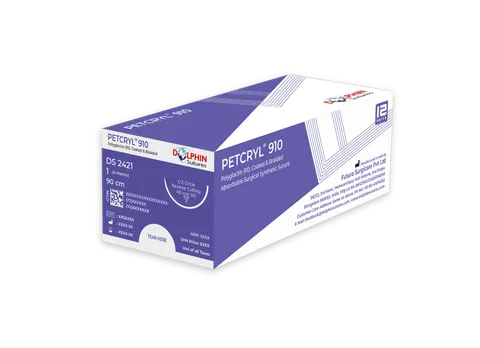
Polyglactin 910 Sutures
Petcryl 910 is a braided, coated synthetic absorbable surgical suture made from a copolymer of glycolide and L-lactide. It is designed for soft tissue approximation and ligation, providing predictable hydrolytic absorption and smooth tissue passage.
View details →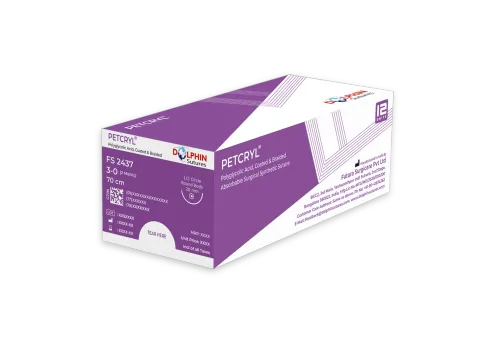
Polyglycolic Acid (PGA) Sutures
PGA Suture from Dolphin Sutures is a synthetic, braided, coated absorbable suture made from 100% polyglycolic acid, engineered for smooth tissue passage, high tensile-strength retention and predictable hydrolytic absorption in soft-tissue approximation.
View details →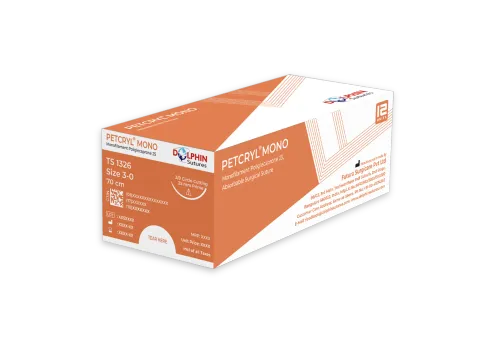
Poliglecaprone 25 Sutures
Petcryl Mono is Dolphin Sutures' Poliglecaprone 25 monofilament synthetic absorbable suture, a copolymer of glycolide and caprolactone offering smooth tissue passage, predictable hydrolytic absorption and low tissue reactivity for soft tissue approximation.
View details →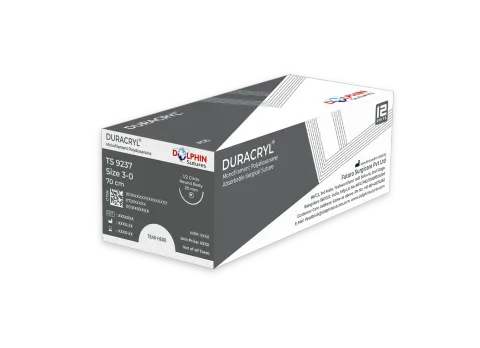
Polydioxanone Sutures
Duracryl is Dolphin Sutures' synthetic monofilament polydioxanone (PDS) suture, composed of poly (p-dioxanone). Absorbed by hydrolysis, it delivers extended tensile-strength retention for soft tissue approximation requiring longer wound support.
View details →Get a quote for Waxocare
Bulk pricing, OEM manufacturing and export documentation — response within one business day.