
 English
 Español
 Français
 Português
 Русский
 العربية
 Deutsch
 Türkçe
 Bahasa Indonesia
 Tiếng Việt
 ไทย
ไทย 简体中文
简体中文
Stainless Steel Sutures
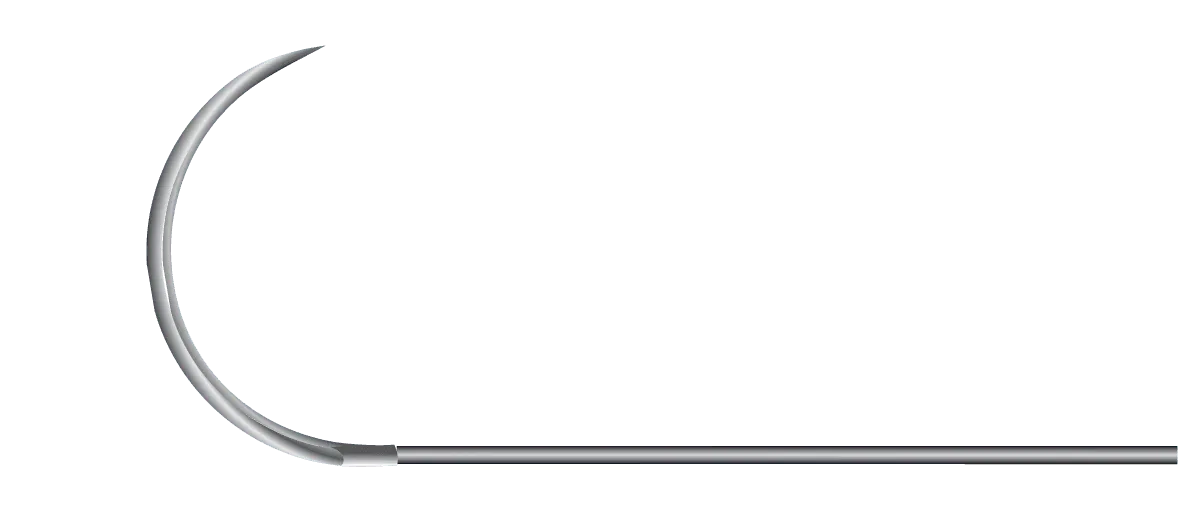
Stainless steel suture is a non-absorbable surgical suture made from 316L stainless steel wire. It is the only metallic material in the non-absorbable class: it is not a polymer, it is not degraded in tissue, and it is intended to be handled and knotted as wire rather than as a strand.
Why it matters
Every other material in this class is a polymer, and the questions asked of a polymer — what its backbone is, whether that backbone carries a hydrolysable bond, whether tissue enzymes act on it — do not apply to a metal. Steel is inert in a way none of the polymers are, including the ones that are not degraded: there is no chain to cleave. What replaces those questions is a different set about the alloy and its corrosion behaviour, which is why steel suture is specified by an alloy designation and a materials standard rather than by a monomer.
The alloy
Stainless steel suture is made from 316L stainless steel, and the designation is worth unpacking, because on a metallic implant the alloy specification does the work that a monomer name does on a polymer one.
316 is an austenitic chromium–nickel stainless steel with molybdenum added. Austenitic names the crystal structure: austenitic grades are formable and drawable, which is the property that allows the alloy to be drawn down into fine wire at all. The L is the part that matters most here. It denotes a low-carbon variant, and the reason to want less carbon is specific: carbon in a stainless steel tends to combine with chromium and precipitate as carbides at the grain boundaries. Chromium tied up in a carbide is chromium not available to the passive surface layer that makes the steel stainless, and the depleted boundaries are where intergranular corrosion starts. Lowering the carbon limits that mechanism.
Dolphin’s steel suture conforms to ASTM Standard F138 Grade 2, “Stainless steel bar and wire for surgical implants” — the standard that specifies the composition and condition the alloy must meet as implant material. The suture also meets the USP and EP requirements for non-absorbable surgical sutures.
Why a metal sits oddly in this class
Every other material in the non-absorbable cluster is a polymer, and the questions that organise a discussion of polymers do not apply to steel. There is no backbone to examine, no ester or amide or peptide bond to ask about, no substrate for a proteolytic enzyme. The reasoning that separates polypropylene from polyamide — whether the chain carries a hydrolysable bond — has no purchase on a metal, because there is no chain.
What replaces it is the alloy question above: which alloy, in which condition, and how it behaves against corrosion. That is why a steel suture is specified by a materials standard and a grade rather than by a chemical name, and why “stainless steel” on its own is not a specification.
Handling
Steel is malleable — it deforms permanently under load without fracturing — and that property is what allows the wire to be handled and knotted rather than springing back or snapping. It is a different physical proposition at the field from a polymer strand, and it asks for different technique and familiarity. That is a description of the material, not a ranking of it against the polymers; which properties matter is a question about the case, and the approved uses are stated in the instructions for use.
Key terminology
- 316L stainless steel
- An austenitic chromium–nickel stainless alloy containing molybdenum. The "L" denotes a low-carbon variant, which limits the carbide formation at grain boundaries that would otherwise make the alloy susceptible to intergranular corrosion.
- Austenitic
- A crystal structure class of stainless steels. Austenitic grades are non-magnetic in the annealed condition and are formable and drawable, which is what allows the alloy to be drawn into fine wire.
- ASTM F138
- The ASTM standard covering stainless steel bar and wire for surgical implants. It specifies the composition and condition the alloy must meet to be used as implant material.
- Malleability
- A metal's capacity to be deformed permanently without fracturing. In a suture wire it is what allows the strand to be shaped and knotted rather than sprung back or snapped.
- Monofilament
- A strand that is a single continuous filament. Steel suture is supplied in monofilament and in multifilament (twisted or braided wire) forms.
- USP
- United States Pharmacopeia. Sets the gauge and tensile-strength requirements a suture must meet at each size. The European Pharmacopoeia (EP) sets a parallel standard.
Technical characteristics
- Composition
- 316L stainless steel — an austenitic chromium–nickel–molybdenum alloy, low-carbon variant
- Material standard
- Conforming to ASTM Standard F138 Grade 2, "Stainless steel bar and wire for surgical implants"
- Construction
- Monofilament; multifilament (twisted or braided wire) forms also exist
- Absorption
- Non-absorbable — metallic, with no polymer chain to hydrolyse or to be degraded by tissue enzymes
- Corrosion behaviour
- Corrosion-resistant; the low-carbon 316L variant is specified for this reason
- Handling
- Malleable — the wire is intended to be handled and knotted
- Strength retention & duration in tissue
- Stated in the instructions for use supplied with the product — these are product-specific and are not reproduced here.
- Indications
- Stated in the instructions for use. Steel is not indicated for every tissue type; the IFU specifies the exclusions.
- Standards
- Manufactured to meet the USP and EP requirements for non-absorbable surgical sutures
How it compares
| Material | Origin | Construction | Backbone chemistry |
|---|---|---|---|
| Stainless steel | Metallic (316L alloy) | Monofilament and multifilament forms | Not a polymer — metallic |
| Polypropylene | Synthetic (linear polyolefin) | Monofilament | Carbon–carbon chain; no hydrolysable bond |
| Polyamide (nylon) | Synthetic (polyamide) | Monofilament and braided forms | Amide bonds; hydrolyse slowly in vivo |
| Polyester (PET) | Synthetic (polyethylene terephthalate) | Braided multifilament, commonly coated | Ester bonds in an aromatic chain |
| Silk | Natural (processed protein fibre) | Braided multifilament, coated | Peptide bonds (fibroin protein) |
What clinicians weigh when selecting
A metal among polymers
The questions that structure a choice between polymers — backbone chemistry, hydrolysable bonds, enzyme substrates — do not transfer to steel. What replaces them are questions about the alloy, its condition and its corrosion behaviour, which is why steel is specified by a materials standard rather than by a monomer.
Handling as wire
A metal wire makes different demands at the field from a polymer strand — it is shaped rather than tied in the same sense, and malleability is what makes that possible. This is a matter of technique and familiarity, not a ranking against polymer sutures.
Permanent implantation
Steel is not degraded in tissue. Where a strand is intended to remain, the relevant question is what the product's instructions for use state about it, not what the material class implies.
The alloy specification
The relevant question about a steel suture is which alloy and which condition, because those are what the corrosion behaviour follows from. 316L and ASTM F138 are the answers a specification gives; a grade designation is not interchangeable with "stainless".
Gauge and needle
USP size governs the strength the strand is required to meet. Needle geometry is selected against the tissue rather than the suture material.
Regulatory status in your market
Approved indications differ by market. The instructions for use supplied with the product in your country is the governing document.
Frequently asked questions
What is stainless steel suture made of?
316L stainless steel — an austenitic chromium–nickel alloy containing molybdenum, in a low-carbon variant. Dolphin's steel suture conforms to ASTM Standard F138 Grade 2, "Stainless steel bar and wire for surgical implants".
What does the "L" in 316L mean?
Low carbon. Reducing the carbon content limits the formation of chromium carbides at the grain boundaries, which is the mechanism that would otherwise leave the alloy susceptible to intergranular corrosion.
Is steel suture absorbed by the body?
No. It is metallic, so there is no polymer chain to hydrolyse and nothing for tissue enzymes to act on. It is not degraded in tissue.
Is steel suture a monofilament?
It is supplied in monofilament form and also in multifilament forms — twisted or braided wire. Which forms are offered is product-specific.
What is ASTM F138?
The ASTM standard covering stainless steel bar and wire for surgical implants. It specifies the composition and condition the alloy must meet to be used as implant material, and it is the material standard a steel suture is specified against.
What procedures is steel suture indicated for?
The approved indications, and the tissue types a product is not indicated for, are stated in its instructions for use, and they vary by market.
Instructions for use
The instructions for use supplied with the product is the controlled document for indications, contraindications, strength-retention data, warnings and precautions. Where this article and the instructions for use differ, the instructions for use govern. Approved indications vary by market.
Medical & regulatory notice
This article is general reference information about a suture material for healthcare professionals. It is not medical advice, not a recommendation for any procedure or patient, and not a substitute for the instructions for use supplied with the product or for clinical judgement. Product availability and approved indications vary by market. Dolphin Sutures manufactures surgical sutures; nothing here should be read as a claim of clinical benefit or of superiority over another material.